Wednesday, April 21, 2010

CESEEPS' LESSON 102 LAUNCHED


CESEEPS’ LESSON 102 LAUNCHED


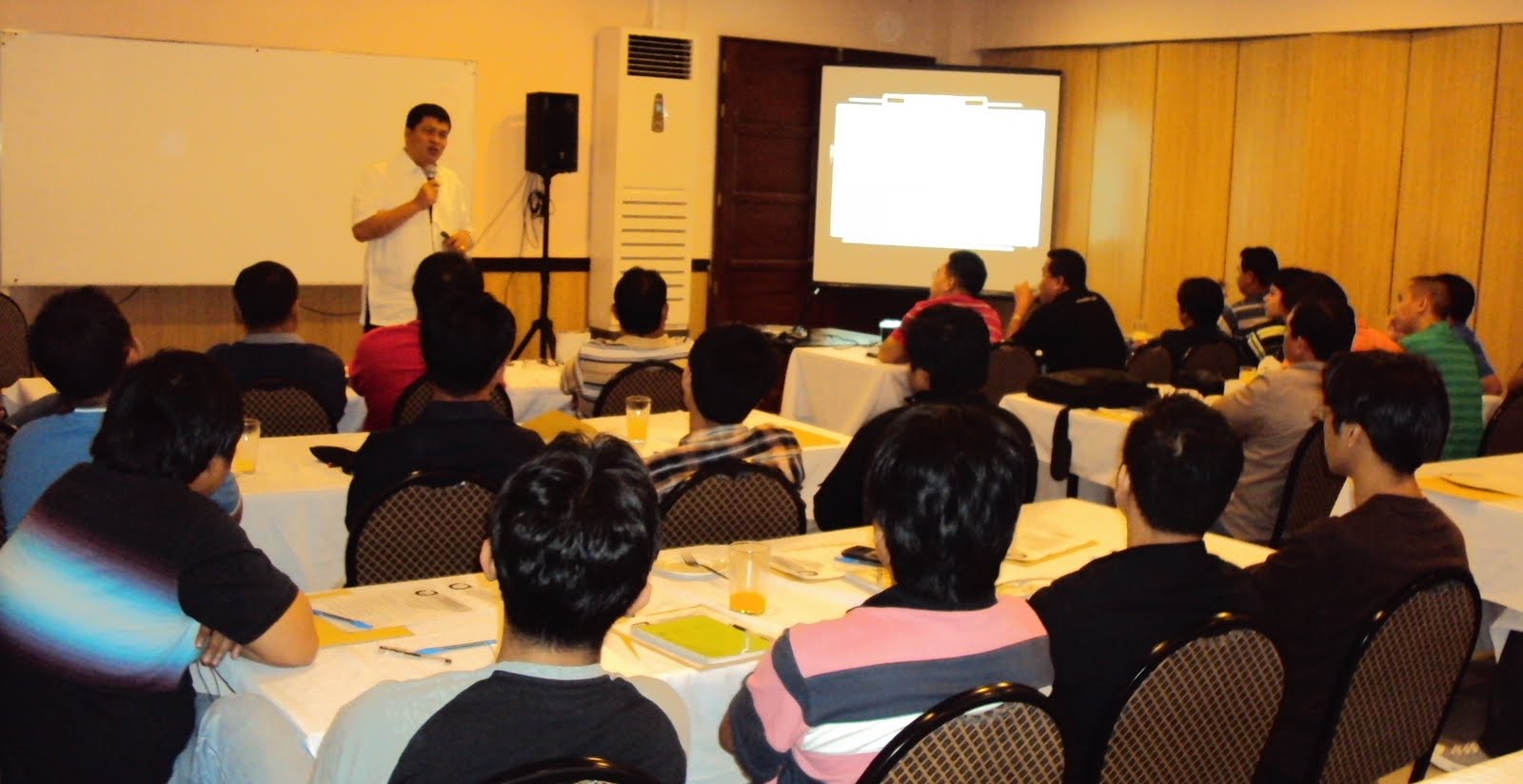
Lesson 102 of CESEEPS’ program on “Electrical Systems Design for Industrial & Commercial Complexes” had successfully been launched on April 14 - 16, 2010 at The Orchard Cebu Hotel & Suites in Mandaue City, Philippines. Earning 24 CPE EE Credit Units, forty (40) electrical engineers & practitioners attended the three-day training program.


CENTRE FOR STUDIES IN ELECTRICAL ENGINEERING PRACTICES & STANDARDS (CESEEPS International) is an accredited IIEE/PRC CPE Provider with an Accreditation Number 2010-011. For year 2010, two accredited programs (Lessons 101 & 102) are offered. (For more information about the details of the seminars, please see related articles in this blogsite).

Schedule of Seminars for 2010:

LESSON 101: March 3 -5, 2010 (W-T-F)
LESSON 102: April 14-16, 2010 (W-T-F)
LESSON 101: May 12 - 14, 2010 (W-T-F)
LESSON 102: June 16 - 18, 2010 (W-T-F)
LESSON 101: July 21 - 23, 2010 (W-T-F)
LESSON 102: Aug 25 – 27, 2010 (W-T-F)
LESSON 101: Sept 29-Oct 1, 2010 (W-T-F)
LESSON 102: Nov 3 - 5, 2010 (W-T-F)

Venue: The Orchard Cebu Hotel & Suites, A. S. Fortuna St., Mandaue City, Cebu, Philippines (unless otherwise announced)

For more information, please call (032) 343-6936 or (032) 345-4531

The story in images:


Sunday, April 11, 2010

CESEEPS' LESSON 101 LAUNCHED


CESEEPS’ LESSON 101 LAUNCHED


Lesson 101 of CESEEPS’ program on “Electrical Systems Design for Industrial & Commercial Complexes” had successfully been launched on March 3 – 5, 2010 at The Orchard Cebu Hotel & Suites. Earning 24 CPE EE Credit Units, forty one electrical engineers & practitioners attended the three-day training program.

CENTRE FOR STUDIES IN ELECTRICAL ENGINEERING PRACTICES & STANDARDS (CESEEPS International) is an accredited IIEE/PRC CPE Provider with an Accreditation Number 2010-011. For the year 2010, two accredited programs (Lessons 101 & 102) are offered. (For more information about the details of the seminars, please see related articles in this blogsite).

Schedule of Seminars for 2010:

LESSON 101: March 3 -5, 2010 (W-T-F)
LESSON 102: April 14-16, 2010 (W-T-F)
LESSON 101: May 12 - 14, 2010 (W-T-F)
LESSON 102: June 16 - 18, 2010 (W-T-F)
LESSON 101: July 21 - 23, 2010 (W-T-F)
LESSON 102: Aug 25 – 27, 2010 (W-T-F)
LESSON 101: Sept 29-Oct 1, 2010 (W-T-F)
LESSON 102: Nov 3 - 5, 2010 (W-T-F)

Venue: The Orchard Cebu Hotel, A. S. Fortuna St., Mandaue City, Cebu, Philippines (unless otherwise announced)

For more information, please call (032) 343-6936 or (032) 345-4531

The story in images:


Sunday, March 14, 2010

THE EVENT'S AFTERMATH

THE EVENT’S AFTERMATH

By Doods A. Amora, PEE


Pacquaio won by a wide margin!

Every one of the 51,000 in attendance at the Dallas Cowboys Stadium and the millions in the boxing world knew it.

Judge Duane Ford scored it at 120-108, a shutout for Pacquiao – meaning, not a single round won by Clottey. Judges Levi Martinez and Nelson Vasquez each scored it at 119-109, giving Clottey one round. My own score card shows a 119–109. I gave Clottey Round 3.


INTENSITY Vs. TEPIDITY

But Pacquiao’s victory was perceived by many as an anemic drama sans the customary excitement. It was not even close. Sad to say, the fight became a target work-out for Pacquaio. That’s why the boxing world was unanimous in its verdict. No argument about it. Lopsided indeed as it was.

Pacquiao widely outgunned Clottey in almost all departments, throwing more than a hundred punches per round against Clottey’s average of thirty three; in the process, pressing Clottey to crouch into his defensive shell almost all night. The fight had just a very few exciting moments despite Pacquiao giving Clottey repeated lures, if not, opportunities to rumble.

Clottey's Lack of Aggression: The Pacman, while skirmishing with a virtual punching bag, his opponent Joshua Clottey ironically was not there to tango any serious risks, much more to stake for a stunning win even if he has the capability to do so. What seemed to steal the limelight of the fight may have been the "piyang-piyang" punch (double-roundhouse punch) Pacquiao landed simultaneously in the 4th round around Clottey's ears. Now, with the ‘mythical double punch’ in boxing (as respected sports analyst & columnist Quinito Henson puts it), it brought down shades of memory lane musing the circa Fernando Poe or Jun Aristorenas of the old Philippine movies.

There were no knockdowns in the fight despite its lopsidedness. Clottey’s turtle shell defense was excellent but his offense pathetically sporadic and was not enough to give colour to The Event. But then the aftermath showed a huge mouse swelling under Pacquiao’s right eye and his face reddened. In contrast, Clottey’s facade was hardly bruised (except for a slight swelling) although blood trickled from his nose. In short, Pacman seemed to appear as the vanquished while Clottey, the winner.

Tough Fight: Yet, the fight gives something to contemplate. Promoter Bob Arum was right in saying that “Clottey would be the toughest Pacman opponent ever”. Indeed he was, as Pacquiao himself conceded: “It was not an easy fight. It was hard. I felt his power. He is incredibly tough”.

In my previous article I mentioned that Joshua Clottey, the hard rock from Ghana, Africa would give Pacman a hard time. In the actual battle yesterday, not only that Joshua Clottey was in fact visibly much bigger, much taller and stronger but also was indeed a German Tiger Tank with crocodile armour. The audible loud thuds of the shots by Pacman on Clottey’s body speak for themselves as they seemed only to bounce back like hitting a heavy rubber bag.

Contrasting Agenda: Noticeably smaller on the ring, the Pacman looked as if a 12-year old kid fighting a full grown adult. The machinegun onslaught by the Filipino Destroyer couldn’t even dodge the Grandmaster. Although Clottey appeared wobbled in the second round, it was just a stroke of fluke as the Ghanaian reappeared unhurt. And the durable Grandmaster in the ensuing rounds took everything that Pacquiao had to offer.

But then Clottey had to lose. Pacman came to fight. Joshua submitted himself to preserve his own agenda. Pacman’s Brilliancy against Clottey’s Passiveness - so to speak!

“Pacquiao is very fast. This is the first time I’ve lost a fight”, a befuddled Clottey said, dismissing of course his previous three arguable losses. The former welterweight champion Clottey lost while maintaining his claim of never having been knocked out as a pro. Was this his motivation?


STATISTICS SPEAK

Compubox numbers show Pacman threw 1,231 total shots and connected on 246. Out of 1,231 that Pacman unleashed, 632 were power punches and 549 lead right hand jabs. Out of 632 power punches, 232 of them connected while out of 549 jabs, only 12 landed cleanly.

On the other hand, the Ghanaian Hitter threw a total of 399 shots connecting 108. Of his 399 punches, 237 were power punches where 82 connected. Out of 399 Clottey thrown, 162 of them were jabs landing 26.

To recap:

1) Total Punches Thrown: Pacman = 1,231 (246 landed);
Clottey = 399 (108 landed)
2) Power Punches Thrown: Pacman = 632 (232 landed); Clottey = 339 (82 landed)
3) Jabs Thrown: Pacman = 549 (only 12 landed); Clottey = 162 (26 landed)


THE BOTTOM LINE

It is clear then that the prolific Pacman outworked the economical Hitter from Ghana in a ratio of 3:1. No doubt about it, and it was these sheer numbers that made him victorious. But note that Pacman wasted 400 power punches (63.3%) to the Grandmaster’s gloves, arms and elbows. On top of this, Pacman’s measly twelve connecting jab outputs are only 2.2% of his inputs. It meant further that 537 of these jabs did not reach its destination. All taken together, about 985 Pacman blows were blocked by the Grandmaster. Whew!

Of the total punches Pacman unleashed, only 246 landed or a measly 19.98% - what a very low efficiency so to speak. And to emphasize, Manny Pacquiao was unable to land (except for a few streaks) his signature darting straight lefts that everyone was waiting for. Somehow it went to show the effectiveness of Clottey's defense. Had it not been for the Pacman’s stamina in the same work rate, Manny would not have reached the end of the 12-round tunnel.

On the other hand, 31.86% of Clottey’s total blows connected, while 24.19% of his power punches found its mark. Clottey’s jabs was 387 less than Pacman’s, but it connected 26, that is more than double of Pacman’s output of 12. Economical but accurate? If that's what we call efficiency, let it be.

What does this mean? If Pacman was lethargic, and Clottey a little bit industrious, the outcome might have ended up in reverse.


MATTER OF POWER

What if The Hitter opted not to be ‘economical’? What would have happened should the Grandmaster double his inputs? By saying ‘double the workrate’; I mean, I wish to see only 798 blows from the Hitter. That's only 64.8% of Pacman’s unleashed punches.

Scary Thoughts: I fancy imagining this scenario because Clottey did manage with ease and uncanny timing to land crisp jabs, a number of counter right hands, body hooks and strong uppercuts that all the time snapped Pacquiao’s head up. These few moments of Clottey’s brilliance were the ones responsible for Pacman’s face swelling. And this is the reason why Lenny de Jesus, Clottey’s trainer pleaded him to throw more of his own attacks. He must have seen a very probable upset.

Clearly, there was terrifying power packed in those Hitter’s blows. And imagine if Pacquaio received double the amount, what could have been the damage? Clottey said, “I didn’t feel Pacman’s power”. Then, why didn’t he engage? After all, he is a warrior of hardened steel make-up clad in crocodile armour? He could have always bulldozed those Pacman’s flurries and find the marks of his own weapons? He could have done it, I believe. We saw how the Ghanaian ignored and brushed away Pacman’s attacks on the body. Or probably, he was afraid because he knew his chin is not as good as his granite body.

“I think he’s feeling Pacquiao’s power,” in contrast, Clottey’s trainer Lenny DeJesus said during a late-rounds interview with HBO. Clottey himself explained why his caution, “Pacquaio was waiting for me to open up so he could time and counter me.” Clearly Clottey must have felt that engaging with the Pacman for 12 rounds would only end up in frustration and futility.


SPEED & VOLUME DID IT

It can be recalled that there were scary instances that Manny stood in front of Clottey in the willingness to receive the Hitter’s thunderous body shots and uppercuts. I don’t really know if they were ploys to dupe Clottey to open up into a false sense of confidence. But if they were, just the same, Manny would launch series of fists of fury in massive counter-attacks that just overwhelmed Clottey’s impetus every time.

Even if the Grandmaster wanted to play toe to toe, Manny Pacquiao’s volume of punches thrown in crazy angles would have drowned Clottey of any chance of any counter-offense without opening himself up for a sure knock-out. Remember, Manny threw 832 more punches than the defense preoccupied Clottey and clearly didn’t give the Ghanaian much of an opportunity. In this fight, Manny’s defense is his offense. There was no way to escape, then. The same end-result was inevitable.

“Clottey was afraid to open up because he knew Manny would hit him,” said Roach. “That’s why he didn’t throw as many punches as he should have. If he did, Manny would’ve located the openings to land his hooks and straights.”

In the eyes of the legendary trainer Freddie Roach, “If there was something that I found lacking, it was probably Manny’s defense. I thought he got hit with Clottey’s right hand once too many. Other than that, it was a perfect fight.”

In this case gentlemen, Joshua Clottey, the Hitter, or the Grandmaster from Ghana achieved his objectives.
Firstly, even the Pacman, the best pound-for-pound fighter in the world could not stop him. Secondly, he achieved his millions a number of his countrymen are wanting.

With the guaranteed $ 1.2 million ++ (probably reaching $ 3.0 million), life in boxing must after all, not that bad.

DOODS
March 14, 2010

Saturday, March 06, 2010

THE EVENT


THE EVENT
By Doods A. Amora, PEE


WBO WELTERWEIGHT CHAMPIONSHIP OF THE WORLD
March 14, 2010: THE EVENT: PACMAN Vs. THE HITTER


But, boxing pundits see THE EVENT uneventful...

The tremendously one-sided odds at minus 350 for Clottey against Pacquiao’s plus 500 show a reflection of how the boxing world looks at the fight. 'The Event' is perceived to be easy for Pacquiao - not the usual heart-throbbing excitement, not the usual high voltage level of competition. So then, it is not the event most people wanted to see.

Probably, the name ‘Joshua Clottey’ lacks the luster imprimatured in the subconscious. Following the fizzling-out of the much fancied Pacquiao-Mayweather bubble, the ‘Hitter from Ghana' has seemed relegated to second fiddle - probably an unworthy substitute.


I however disagree.


JOSHUA CLOTTEY

Underestimating the guy would be a big blunder. Joshua Clottey (35-3 with 20 KO’s), is first rate. To recall, he was also a welterweight world title holder after subduing the quick-fisted Jab Judah, a southpaw same as the Pacman. And Joshua is still in his prime. Although he had three losses in his resume - all of them were interestingly arguable.

Argentina’s Carlos Baldomir, Mexico’s Antonio Margarito and Puerto Rican Miguel Cotto, yes, all big world champions, inflicted the only blurs into the otherwise excellent career of the man.

On the other hand, Pacquaio (50-3-2, with 38 KO’s), had three losses too – from a fellow Pinoy, a Thai and of course from the Mexican Erik Morales in their first encounter. These losses too were regarded as flukes. Except for Erik Morales, the first two losses of Manny are no big names.

And here we go again, what makes the fight appealing is the fact that Clottey is taller, bigger and a very dangerous welterweight. The “Hitter from Ghana" is durable, highly physical, intense and hungrily motivated to win. Of course our Pacman had proven his mettle against other big challenges as Dela Hoya, Hatton and Cotto. But judging from Joshua’s fearsome physique, he is like the impenetrable Tiger Tank terrorizing the African deserts during the Hitler days. Comparing with the softer Dela Hoya, Hatton and Cotto whom Pacman conquered, Clottey appears to be stiffer, harder and more durable. He was downed by Miguel Cotto two times in their own battle but each time he rose upon the occasion to finish strong.

Clottey has a solid good defense and note that he has a big gun in his sleeves – the head butt!

History tells us that Clottey was winning in his IBF Championship fight with Carlos Baldomir when he was disqualified in the 11th round for repetitive head butts. Prior to the disqualification, he was penalized two points for head-butting in the previous rounds. He could have won the title handily had he played clean.

Against Cotto, Joshua Clottey failed in what could have been the biggest upset at the time, in a controversial split decision to the heavily favoured Puerto Rican icon. Many fans called it a robbery. But again, Clottey’s head-butting frenzy opened a cavernous wound around Cotto’s left eye in the third round. And Cotto bothered by blood oozing in the later rounds was never the same again. Cotto luckily escaped defeat though.

Watching youtube against Antonio Margarito, Clottey was on his way to deliver his best performance in a lifetime; in fact, he was ahead on points until the fourth round when he broke his hand. Despite the injury, Clottey refused to deteriorate and maintained his work rate until the end bell. He lost by a slim margin. Had it not been for the injury, Clottey said he could have won the fight.

So then, it showed that Clottey’s hard head (that not even a sledgehammer can crack) is more superior than his fists. His head, hardened as steel as in a Tiger Tank’s cannon is actually his open-secret weapon should the goings get rough. Pacquiao has to be prepared for it, otherwise the reminiscence of the bloody first Morales fight and the horror of the dirty Agapito Sanchez skirmish would flash back again.

Clottey, the street fighter and head-clashing monster has never been stopped. Of the fights I viewed on youtube, I never saw Clottey bleed, nor his facade deformed. He is fundamentally sound, ring smart and operates best in the inside. His arsenal includes left & right combinations, fearsome left & right uppercuts and counter left hooks, and of course the headbutt. His timing is impressive and accurate. His punches are all dedicated with bad intentions. Known for his toughness and durability, Clottey enjoying height & reach advantage will definitely be heavier than Pacman when they face off on March 14. And there is no catch weight here, they at full 147 lbs.


MANNY PACQUIAO

Also known as The Grandmaster, Joshua Clottey could be the toughest opponent the Pacman has ever had, as promoter Bob Arum puts it.

But Manny Pacquaio, the Tornado from the East, is a more complete and a much more versatile machine. But he has to work doubly hard to earn victory.

Mirroring from Coach Roach, Freddie knows the fight would be rough & tough. In the Hatton fight, Coach Roach predicted a three round game. In the Cotto episode, a first-round knock-out was foreseen (although it could have been a ploy). Now with Clottey, he is looking at a stoppage in the 9th round. It goes without saying that the Clottey fight is not a 'walk in the park'. And Freddie had to do more on his homework.

“We know his pluses and his mistakes,” said Roach. “He has a good defense but is very predictable. If his chin holds, we’ll destroy him downstairs and in nine rounds, the game is over.”

In most of the previous Pacman’s fights, the scary concerns were always the distractions during training. Now sombre as it appears to be, Pacman’s training camp is dead serious on Clottey. This time the boxing world never did hear of Freddie Roach or Alex Ariza sounding off an alarm. The trainers are all happy. Earlier than expected, Pacman as of last week seemed already in his peak form and ready to rumble. Conditioning Coach Alex Ariza vouched for it as “Pacman had never been in top shape than this fight”. This sounds good...


The magic in Pacman’s exciting performances will again showcase in this episode. But it certainly wouldn’t be easy. Clottey in his psyche has to win. Winning over the most popular and best pound-for-pound fighter in the world could not just be a challenge. It’s an obsession. He has to do all means within his will and power to win this fight. That makes Joshua Clottey more dangerous. He has nothing to lose.

However, there will be big body shots to the rib cage followed by right hooks to the chin by Manny. Flashes of them are seen in the drills with the punch mitts. Of course, the sight of the usual darting lead lefts are again figures of imagination this early, and don’t forget the venom in the Manila Ice that froze Hatton and Cotto.

The question probably is ‘how long can Clottey survive Manny’s onslaughts?’ On the other hand, ‘how can Manny deal with the sticky crimson fluid blinding his sight after a series of head butts?’ Surely, it would be a fight to remember.


In Pacman’s fight with Miguel Angel Cotto, I wrote that 'I loved to see the ending by a spectacular uppercut'. It didn’t happen, but then, most likely it will come next Sunday morning.


By then, The Hitter from Ghana, the so-called Grandmaster will join the frenzied party portrayed above.


Doods
3/7/2010

Tuesday, February 02, 2010


ANNOUNCEMENT: TRAINING PROGRAM FOR 2010

We are glad to inform the readers of this site that CESEEPS International, Inc. is already an officially approved CPE Provider by the IIEE CPE & PRC Councils. Likewise, the programs, Lesson 101 and Lesson 102 of "ELECTRICAL SYSTEMS DESIGN FOR INDUSTRIAL & COMMERCIAL COMPLEXES" had already accredited by both Councils. Participants can now earn as much as 24 credit CPE units for each lesson.

In view of the above, CESEEPS International therefore is announcing the final schedule for its 2010 Training Program as follows:

LESSON 101: March 3 -5, 2010 (W-T-F), Venue: The Orchard Cebu Hotel, A. S. Fortuna St., Mandaue City, Cebu, Philippines

LESSON 102: April 6 – 8, 2010 (T-W-T). Note: Rescheduled to: April 14-16, 2010
LESSON 101: May 12 - 14, 2010 (W-T-F)
LESSON 102: June 16 - 18, 2010 (W-T-F)
LESSON 101: July 21 - 23, 2010 (W-T-F)
LESSON 102: Aug 25 – 27, 2010 (W-T-F)
LESSON 101: Sept 29-Oct 1, 2010 (W-T-F)
LESSON 102: Nov 3 - 5, 2010 (W-T-F)

Friday, December 25, 2009

ELECTRICAL COMPETENCY SEMINARS FOR 2010


ELECTRICAL COMPETENCY SEMINARS FOR 2010


CESEEPS INTERNATIONAL announces the offering of a wide-ranging competency-based Training Program for 2010. The Program is composed of two component seminars which had already been applied for accreditation with the IIEE & PRC CPE Councils.

In alignment with the IIEE/PRC CPE Councils' requirements in ensuring the quality of the program, the seminars are designed to feature more detailed approaches and innovations in terms of coverage, vivid presentations, ‘sought-for’ illustrative examples and eye-revealing applications in addressing myths & traditional folklores common in practice.

The seminars are supported with more comprehensive, newly updated & substantially expanded training notes & materials in book-bound forms. These Notes had been a product of decades of hard work, research studies and collection of fascinating information relevant to the field of electrical system designing. It is then CESEEPS’s intent to share these accumulated treasure to the upstart young engineers who look up the same dream of competency development through a series of training programs that CESEEPS has made available. Attending the training program will earn the participant at least 24 CPE credit units
(as being applied for) per seminar.

Completing these two seminars will make the engineer confident in designing & building the electrical systems for industrial & commercial complexes from the viewpoint of sizing & dimensioning. This therefore is truly addressing a part of the gap between the academe and the industry.

Other sequel seminars will be announced later...


THE 2010 & 2011 SEMINAR CONTENTS

There are two sets of seminars that CESEEPS will be carrying-out for the next two years starting 2010. These are the so-called Lessons 101 and 102 of the program entitled, “Electrical Systems Design for Industrial & Commercial Complexes”. As of the present, these two seminars are the ones applied for IIEE & PRC CPE Council accreditation good for 2010 & 2011.

SEMINAR 1 (Lesson 101):
‘ELECTRICAL SYSTEMS DESIGN FOR INDUSTRIAL & COMMERCIAL COMPLEXES’ (Part 1)

In a three-day seminar, Lesson 101 is just Part One of the basic module on ‘ELECTRICAL SYSTEMS DESIGN FOR INDUSTRIAL & COMMERCIAL COMPLEXES’. It deals with sizing and dimensioning of assorted circuits from the smallest loads up to the entire power demand of the electric system of a commercial building or complex. It discusses in fine details how low voltage electrical system components are sized from scratch i.e., from the remotest branch circuits, panelboards, distributors, feeders & sub-feeders, to LV/lv transformer circuits and up to the main power center.

Simplistically made understandable to the engineer-participant, Lesson 101 attempts to achieve part of the designing & dimensioning of a model medium size-industrial plant or commercial complex in the Philippine setting. It also discusses myths and folklores in designing that are common occurrences in practice.

With the Philippine Electrical Code, National Electrical Code and other International Standards such as ANSI and IEC as bases, the seminar will likewise demonstrate with detailed illustrative examples on the ‘Applications of Wires & Cables – Its Penalty Conditions’, ‘The Myths in THHN Application’, ‘The Art of Illumination’ as applied and interpreted into electric circuits, ‘Non-Motor Branch Circuit & Feeders’, ‘The Importance of Ballasted Lamps in Circuit Dimensioning’, ‘Circuit & Feeder Overcurrent Protection’, ‘Three-Phase Panelboard Dimensioning’, ‘Sizing Neutral & Equipment Ground Conductors’, ‘Powering Computers & I. T. Environments’, ‘Wire & Cable Withstands & Current-Limiting Strategies’, ‘Designing LV/lv Transformer Circuits’, and ‘Over-All Building Load Estimation’.

SEMINAR 2 (Lesson 102):
‘ELECTRICAL SYSTEMS DESIGN FOR INDUSTRIAL & COMMERCIAL COMPLEXES’ (Part 2)

As sequel to Lesson 101, Lesson 102 is Part Two of the module on ‘ELECTRICAL SYSTEMS DESIGN FOR INDUSTRIAL & COMMERCIAL COMPLEXES’.

Lesson 102 somehow completes the electrical dimensioning for the industrial plant or commercial complex in concept. It deals with the detailed designing of Motor Controllers for Specific Applications, Motors & Group Motor Circuits, Motor Control Centers & Associated Feeders & Distributors, Fire Pumps & Emergency Supplies, System & Equipment Grounding, Over-All System Dimensioning, and Power Centers & Distribution Systems commonly employed in industrial & commercial complexes.

The seminar likewise discusses ‘How to Develop Single Line Diagrams – the ANSI Vs. IEC Styles’, ‘NEMA Vs. IEC Style Components & MCC’s’, ‘Sizing Capacitors for MCC’s & Power Centers’, ‘Sizing Neutral & Protective Earth Conductors – The ANSI & The IEC Ways’, ‘Application of Different Earthing Systems’ employed all over the world, ‘Selection of Appropriate Voltages for the Industrial Plant or Commercial Complex’ and ‘The Right Equipment & Components for Industrial & Commercial Complexes’ in concept.

Made simplistically understandable to the engineer-participant; the three-day seminar on Lesson 102 attempts to achieve part of the design of a model medium size-industrial plant or commercial complex in the Philippine setting.

Information contained in this work has been obtained from sources believed to be reliable. Provisions of the Philippine Electrical Code, the National Electrical Code and other International Standards are cited as bases, - in an effort to make the young engineer grow in these particular fields.


THE TRAINING MATERIALS

In a series of ‘power notes’ called in its entirety as, “DESIGN PRACTICES IN ELECTRICAL SYSTEMS”, these Notes are written as materials for a training program intended for cadet engineers, electrical practitioners, plant engineers, maintenance engineers, electrical designers, construction engineers & project managers.

To the up-starting engineers, these materials open up real-life applications on the theories learned from college that make them conversant & confident on actual systems found in industrial environments.

To the practicing electrical engineers, these notes provide quick design practices that translates into shorter technical planning, prompt equipment procurement and shorter execution time; the results of which, are cost effective, safe and reliable electrical systems.

The concepts, procedures and pronouncements written in these notes are based on recognized engineering practices and publications in reference to the PEC of the Philippines; NEC, IEEE & ANSI of the USA; CENELEC of Europe; and IEC of the World. Experiences in best designing practices by others as well as the benchmarks gathered from several technical audits are interpreted herein, viz-a-viz the behavior of industrial electrical systems. Attempts to simplify and focus on specific applicable areas in the Philippine scenario but cognizant to international standards are typical in these Notes.

The Training Materials “DESIGN PRACTICES IN ELECTRICAL SYSTEMS” will form part of the “must know” competencies imperative to Filipino engineers. Focused on industrial plant and commercial building applications, these training notes are envisioned to become the greatest legacy that we can offer.

These materials are composed of component notes, as follows:

1) NOTES 1A: ‘ELECTRICAL SYSTEMS DESIGN FOR INDUSTRIAL & COMMERCIAL COMPLEXES’ (Part 1): (The Red Notes- Series 1A)

2) NOTES 1B: ‘ELECTRICAL SYSTEMS DESIGN FOR INDUSTRIAL & COMMERCIAL COMPLEXES’ (Part 2):
(The Red Notes- Series 1B)

Soon to follow are the new versions of the following Notes:

3) NOTES 2A: ‘FAULT CALCULATIONS AS APPLIED IN INDUSTRIAL & COMMERCIAL COMPLEXES’ (Part 1):
(The Gray Notes- Series 2A)

4) NOTES 2B: ‘FAULT CALCULATIONS AS APPLIED IN INDUSTRIAL & COMMERCIAL COMPLEXES’ (Part 2):
(The Gray Notes- Series 2B)

5) NOTES 3A: ‘MEDIUM VOLTAGE SYSTEMS & INDUSTRIAL SUBSTATIONS’ (Part 1):
(The Gold Notes – Series 3A)

6) NOTES 3B: ‘MEDIUM VOLTAGE SYSTEMS & INDUSTRIAL SUBSTATIONS’ (Part 2):
(The Gold Notes – Series 3b)

7) NOTES 4: ‘MAINTENANCE ENGINEERING FOR POWER SYSTEMS’ (The Green Notes
)


MECHANISM FOR ENSURING QUALITY OF PROGRAM

1) Completeness of Training Equipment & Devices

Four (4) units Laptop Computers
Two (2) units LCD Projectors
Two (2) units Projector Screens
One (1) unit Kyocera Laser Printer, KM-1510
One (1) unit Hewlett Packard Colour Laser Printer, CP1215
Two (2) units Shure Professional Microphone
One (1) unit Spring Book Binder
One (1) unit Pioneer DVD Player
One (1) unit White Board, 4’ x 8’

2) Effective Training Materials

Each participant shall be provided with a especially written book-bound ‘Power Notes’ as part of training materials for the specific scope of the program being applied for.

Two (2) Laptops with two (2) Projectors shall be used simultaneously in the program. One for the Power Point presentations and the other one for the pre-organized illustrative examples, tables, charts; while the white boards shall be used for detailed calculation tasks.

Each participant is to be provided with a kit containing bond paper, writing pads, pens, pencils, etc.

3) Relevant Topics

Topics and over-all seminar contents are carefully chosen as relevant, real-life, workable and more importantly, addressing the training needs of the engineers-participants.


4) Instructors/Resource Persons/Speakers

CESEEPS has the following line-up of Speakers/Resource Persons:

Doods A. Amora (DAA), PEE, 2nd Place, 36 years in EE experience
Noel T. Fernandez (NTF), PEE, MMExM, 29 years in EE experience
Ely P. Silvosa, Jr. (EPS), PEE, 5th Placer, 26 years in EE experience
Ernesto B. Abunda, Jr. (EBA), 3rd Placer REE, PEE, 15 years in EE experience
Roland C. Alcos (RCA), PEE, 31 years in EE experience
Wilfredo P. Canizares (WPC), PEE, 32 years in EE experience

5) Venue, Food, etc

Venue shall be in function rooms of hotels, air-conditioned and with good sound system facilities.

Food, such as: One Lunch and two (2) Snacks per day shall be provided along with flowing coffee and cold drinking water.


MECHANISM FOR MEASURING QUALITY OF PROGRAM

Pre–Seminar Diagnostics: This is a multiple choice written exams aimed to determine the stock knowledge of engineers-participants on the subjects focused in the seminar.

Post-Seminar Diagnostics: This is a multiple choice written exams aimed to determine and establish the learnings acquired from the seminar and so with the effectiveness of the program.

Seminar Evaluation by Participants: This feedback mechanism is accomplished by each participant on his/her impression, comments and rating on the training program. It also indicates the strengths, weaknesses and areas for improvements. This evaluation will also determine the success or failure of the program.

OTHER SEMINARS: Seminars on other subjects are envisioned to be conducted in later years and will be applied for accreditation accordingly as the time comes.


CESEEPS IN RETROSPECT

CESEEPS INTERNATIONAL ASSN., INC. is a SEC-registered non-stock, non-profit corporation whose mission is focused in building-up the competencies of electrical engineers in this part of the globe. CESEEPS is the acronym for CENTRE FOR STUDIES IN ELECTRICAL ENGINEERING PRACTICES & STANDARDS.

Bannering the all-time theme, “The Globalization of the Filipino Electrical Engineer”; CESEEPS International, as a Training Centre aims to catalyze the engineer in developing himself into a world-class and globally competitive technocrat.

For 8-1/2 years, CESEEPS had been into organizing trainings and seminars since the second half of 2002. In December of 2009, CESEEPS has logged a total of 73 seminars or an average of some 9.12 seminars per year.

Historically in 2002, the centre was assembled through the visions & efforts of:

DOODS A. AMORA, PEE; ELY P. SILVOSA, Jr., PEE; ARSENIO A. ABELLANA, PEE, MSEE; FELIX BENSADOUN (a French National – Country Manager of Schneider Electric for the Phils), EUGENE H. ABAO, BSEE; ERNESTO B. ABUNDA, Jr., PEE; & NOEL T. FERNANDEZ, PEE, MMExM.

Vision Statement:
“CESEEPS AS THE LEADING COMPETENCY DEVELOPER OF ELECTRICAL ENGINEERS IN THE ASIA-PACIFIC RIM”

Mission Statement:
“THE COMMITMENT TO WORLD-CLASS PRACTICES& INTERNATIONAL STANDARDS”

CESEEPS’ Core Values:
INTEGRITY IN PRACTICE
QUALITY IN PERFORMANCE
PROFESSIONALISM
REAL-LIFE COMPETENCIES
LIVING UP TO STANDARDS

CESEEPS’ Slogans:
“BRIDGING THE GAP BETWEEN THE ACADEME & THE REALITIES IN INDUSTRIES”
“CATALYZING THE ENGINEER AS A GLOBALLY COMPETITIVE TECHNOCRAT

CESEEPS’ Philosophy:
“CREATING VALUE TO THE ENGINEER AS PRODUCTIVE CONTRIBUTOR TO HIS CHOSEN FIELD OF EXPERTISE”

CESEEPS’ GOALS & OBJECTIVES

1) To have fostered & promoted the bridging of the gap between the academe and the industry in the application of real-life electrical engineering,

2) To have provided the Filipino electrical engineers effective mentoring and training avenues in building up competencies in world-class practices & standards in the fields of design, construction, operation & maintenance,

3) To have made the electrical engineer more productive in his chosen field of expertise, and

4) To have in effect provided safe & reliable power systems to the benefit of mankind.


WHAT CESEEPS CAN ACCOMPLISH…

1) Completing the entire Training Program will catapult the electrical engineer several notches in higher dimensions in the practice of electrical engineering,

2) Completing the program will transform the electrical engineer to a practitioner of world-class engineering applying international standards,

3) The application of the competencies derived from this program will not only hasten productivity of the engineer but also result to a safer, more reliable and much better electrical environment.


CESEEPS International Association, Inc.


DOMINICO ‘DOODS’ A, AMORA, PEE
Managing Director
12/26/09

Tel #'s: (032) 345-4531; (032) 343-6936; Fax: (032) 343-6936